Active mom returns to pain-free life following overdue shoulder surgery

Imagine being a young mother and not able to lift or hold your baby, reach into the clothes dryer, back your car out of the driveway, or even reach for a cup in a cabinet without the fear of a shoulder dislocation. For Debbie Brand, those were just some of the daily challenges she faced because of a painful shoulder injury she’d been unsuccessful in getting repaired for 18 years despite seeing two orthopaedic physicians. Brand thought she might just have to “live with it” for the rest of her life which was a difficult realization for someone so active.

“My left shoulder would pop out or grab when I’d try to do the simplest reaching movements,” Brand explained. “It was getting worse and worse and nothing seemed to help. I had an MRI with dye (contrast) that showed something was floating. The physician couldn’t tell what it was and suggested surgery so he could make a definite diagnosis. Another orthopaedic physician told me I had a flat shoulder bone and sent me for three months of physical therapy that did not solve the problem. Needless to say, I was feeling hopeless and thought I’d have to just live with it,” she explained.

According to Brand, her life changed during a chance encounter at her children’s school. A friend had his arm in a sling because he just had arthroscopic shoulder surgery for symptoms much like hers. His surgery was performed by Dr. Steven Chudik, orthopaedic surgeon and sports medicine physician with the Steven Chudik Shoulder and Knee Injury Clinic. “For the first time in years I was hopeful,” Brand said. “I scheduled an appointment with Dr. Chudik. He was the first orthopaedic surgeon I’d seen who was able to diagnose the cause of my pain and provide me with a real solution,” Brand explained.

Brand underwent a special arthroscopic procedure developed by Dr. Chudik to repair a torn labrum and reconstruct her glenoid—her shoulder joint socket. “Debbie’s multiple dislocations eroded her glenoid. I had to completely rebuild it with a bone from her hip,” said Dr. Chudik. “Surgeons familiar with this complicated problem perform the procedure through a large, open incision that cuts the rotator cuff and dislocates the shoulder. My arthroscopic technique uses special instruments to address the problem through several small incisions that makes recovery easier and more complete than with open surgery,” he explained.

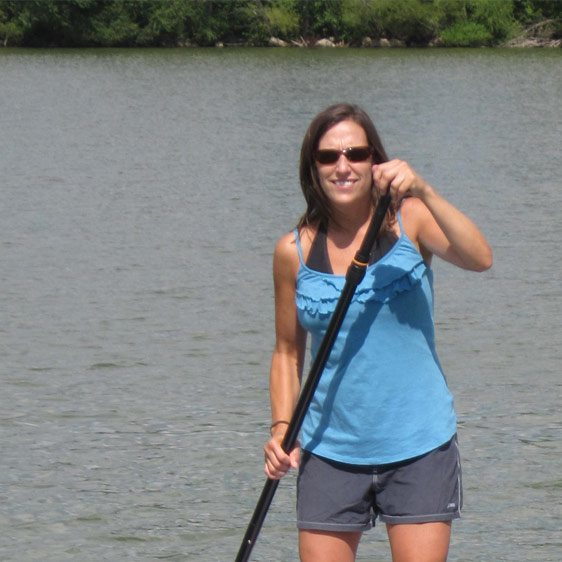
At first, five months of physical therapy three days a week seemed daunting. However, Brand feels the outcome was worth the time invested. “I’ve had no problems what so ever—no stress or worries like in the past that my shoulder might pop out,” she said. “Dr. Chudik gave me my life back. I’m able to do things that had been impossible for years and even try some new ones I would never have considered like paddle boarding,” Brand explained. “I never realized how much I was compensating to make up for my bad shoulder. I’m so glad I found Dr. Chudik.”
Second shoulder work injury jeopardized Kucera’s job, bow hunting pastime

Kevin Kucera is among the countless people who suffer aches and pains after they move, lift, push and pull things. However, the day after Kucera moved a heavy display on his own at work, his shoulder was exceptionally sore. Kucera, an customer service representative whose clients include “big box” hardware stores, knew his arm pain was more than just a strain. So, he completed his employer’s necessary injury report paperwork and called Dr. Steven Chudik, an orthopaedic surgeon and sports medicine physician with the Steven Chudik MD Shoulder and Knee Injury Clinic. Dr. Chudik performed surgery on Kucera’s knee several years earlier and non-operatively treated him the previous year for another shoulder work injury.

Dr. Chudik ordered a magnetic resonance image (MRI) that showed a possible labral tear in Kucera’s shoulder and recommended surgery to repair the tear. “All I could think about was the need to get the surgery scheduled so I could get back to my job and hopefully bow hunt in the fall,” Kucera said.

What Kucera discovered was how complicated the Illinois Workers Compensation approval process could be. “The checks and balances within Workers’ Comp are there for a reason, and I understood that,” Kucera explained. “Thankfully, Dr. Chudik and his staff helped me through the process so I could get my surgery, start physical therapy, return to my job and get my life back to normal as soon as possible,” Kucera added.

“At the time of his arthroscopic surgery, Kevin not only had a bicep tear that needed to be reattached, but also needed a distal clavicle resection on his shoulder,” Dr. Chudik said.

For someone always on the go, the restrictions of a sling and not being able to drive were the worst part of his recovery, according to Kucera. “It got to the point where I actually looked forward to physical therapy because it got me out of the house” he joked. “Physical therapy started days after surgery incorporating range of motion and six weeks later I started light weight lifting. After a few months, I moved into work conditioning. Once I was able to pass the strength test, I was released to work. I was feeling good, so I asked Dr. Chudik if he’d let me bow hunt. Dr. Chudik told me my shoulder was still healing and he did not want me to for fear I’d tear out everything he repaired, Kucera explained.”

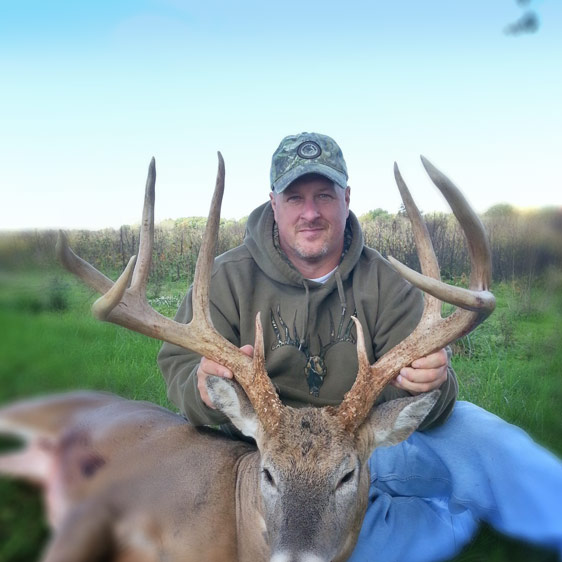
However, a change in Illinois’ crossbow permitting provided an acceptable compromise. Dr. Chudik signed paperwork allowing Kucera to apply for a temporary permit. Once drawn, a crossbow does not require the hunter to hold the bowstring taut making it easier for people with disabilities. In Kucera’s case, it let him hunt without reinjuring his shoulder. On his first evening out, Kucera got a record book 173-inch, nine-point buck and his outdoor life back. Grateful to be able to work and hunt again, Kucera said he is much more conscious about moving and lifting and asking for help. “I think now before I do anything,” Kucera said. “I don’t want to screw it up again!”

Uncommon knee condition nearly sidelines All American’s lacrosse future, NCAA national championship

The last thing a highly recruited high school athlete wants to hear is they are going to miss playing their senior year and potentially lose a Division 1 opportunity because of an injury. That is what Lyons Township (LT) High School football and All American lacrosse standout, Kyle Barrett faced when his left knee began hurting the summer before his senior year of football and throughout an East Coast lacrosse camp for collegiate prospects.

According to Barrett, he suffered a number of athletic injuries starting with a broken hand in eighth grade that he broke two more times, as well as incurred hamstring and neck injuries. However, none were potentially as devastating to his athletic goals as the reoccurring knee pain he developed that fateful summer. “I’d been treated by Dr. Chudik for my past injuries so when the knee pain started, I had to have him check it out,” Barrett said.

Neither multiple X-rays nor a magnetic resonance image (MRI) of Barrett’s knee provided Dr. Steven Chudik with a definitive diagnostic answer. “They didn’t show anything,” Barrett explained. “And, because the pain only occurred when I made certain movements, the problem wasn’t easily pinpointed,” he added.

With no detectable cause for the pain, Dr. Chudik prescribed a conservative physical therapy treatment so Barrett could at least participate in a recruiting camp that summer. “So, there I was at lacrosse camp talking to college coaches about the prospect of playing for their school and all the while I was doing physical therapy for my knee. They had no idea and I certainly didn’t want to jeopardize any chance I had at a scholarship,” Barrett explained.

However, Barrett’s hopes for playing football senior year vanished when his knee pain returned during the first game of the season. “I knew then that exploratory surgery with Dr. Chudik was what I needed to determine what was causing the pain, “Barrett said.“I just didn’t want to miss my senior year of football, but had no choice if I wanted to play lacrosse in the spring,” he lamented.

“Through the years, I have seen—especially in young athletes—this uncommon occurrence when diagnostics fail to demonstrate the reason for a patient’s pain,” explained Dr. Steven Chudik, board certified orthopaedic surgeon, sports medicine physician and US News & World Report Top Doctor for orthopaedics with the Steven Chudik Shoulder and Knee Sports Injury Clinic, Westmont, Ill. “In Kyle Barrett’s case, arthroscopic exploratory surgery was the only solution. The hardest part was not being able to tell Kyle ahead of time whether he would miss only football or lacrosse, too,” Dr. Chudik explained.

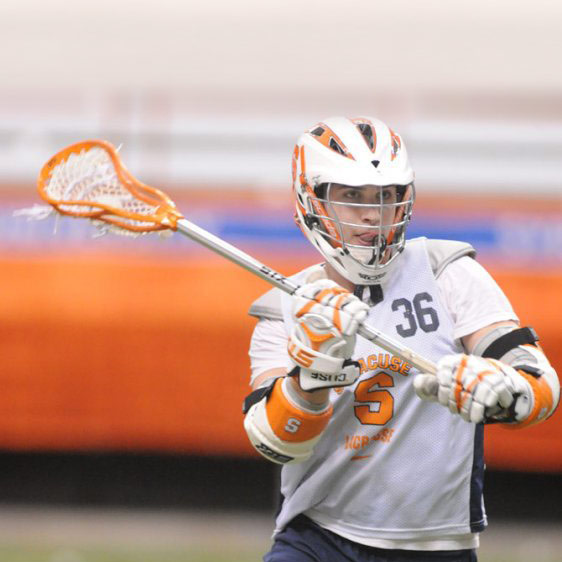
For Barrett, the choice was simple. “I needed to fix whatever was causing my pain since I’d been recruited by Syracuse University for lacrosse at that point. So, I sat out the remainder of the football season and had the surgery,” Barrett said. “Fortunately for me, Dr. Chudik treated my knee with a special arthroscopic surgical procedure. It allowed me to recover quickly so I didn’t miss out on an undefeated lacrosse season and spot on the Division I Syracuse lacrosse team,” the LT high school All American reminisced.

During his first year as a lacrosse Orangeman, Barrett helped his team win a national championship. Today, the Industrial Services Associate with NAI Hiffman stays active with pick-up lacrosse games, running, biking and his newest sport—rock climbing.

Nagel skates through two orthopaedic surgeries, returns to league play but maybe not snowboarding

Teaching your children to snowboard should be a fun and rewarding experience, or so Nick Nagel thought until he found himself planted face down in a snow bank with a shoulder injury. However, it would be a year later with many league hockey games in the record books, as well as elbow surgery, before Nagel would have his shoulder repaired by Dr. Steven C. Chudik, orthopaedic surgeon and sports medicine physician with the Steven Chudik Shoulder and Knee Injury Clinic in Westmont, Illinois.

“After my snowboarding fall my shoulder hurt from time to time, but it really didn’t bother me very much,” explained Nagel. “I worked in an office and the hockey league had a no check rule, so I rarely had any pain,” he said.

With only an occasional twinge in his shoulder, Nagel continued his daily activities for six months—including working out and lifting weights. “In August 2010, I was in the gym curling weights with my arms resting on a bench—not a lot of weight—and I felt, saw and heard the biceps tendon in my left elbow detach,” Nagel explained. “Immediately I experienced a very sharp and intense pain, but then it subsided. So I went home, showered and drove to work, but stopped at a convenient care center on my way home.” According to Nagel, the convenient care physician assistant (PA) diagnosed the problem as a ruptured bicep tendon and instructed him to see an orthopaedic physician because he needed surgery.

“My son saw an orthopedist at Hinsdale Orthopaedics when he broke his thumb, so I called and made an appointment,” Nagel said. “I saw a doctor who didn’t perform this type of surgery, so he referred me to Dr. Chudik who did a distal bicep surgical repair.”

During his last follow-up appointment, Dr. Chudik asked Nagel about his elbow. “I told him my elbow was great, good as new, but my shoulder was really starting to bother me. Dr. Chudik prescribed physical therapy as a first step,” Nagel explained. Because of work travel commitments, Nagel was not able to fit physical therapy into his schedule. He also took a new job requiring him to relocate from Downers Grove, Ill., to Seattle.

“By that point I was in a lot of pain and I wanted to find out what was going on before I moved, so I scheduled another appointment with Dr. Chudik,” Nagel said. “An MRI showed a torn rotator cuff in my left shoulder that required surgery to repair the damage. But, the question was when because of my move,” he explained.

Fortunately for Nagel, his move date was delayed which gave him time for Dr. Chudik to perform arthroscopic rotator cuff repair surgery before he relocated. “Dr. Chudik referred me to an orthopaedic physician in Seattle to take over my post surgery care and rehabilitation. The new surgeon was amazed at my recovery and told me that most patients aren’t this far along so soon after rotator repair surgery,” Nagel said. “I guess I recover well. Within days after my surgery, I had little pain and didn’t need to take anything except at night. Even my physical therapist was impressed with my recovery. I had most of the range of motion in my shoulder just six weeks after my surgery,” he added.

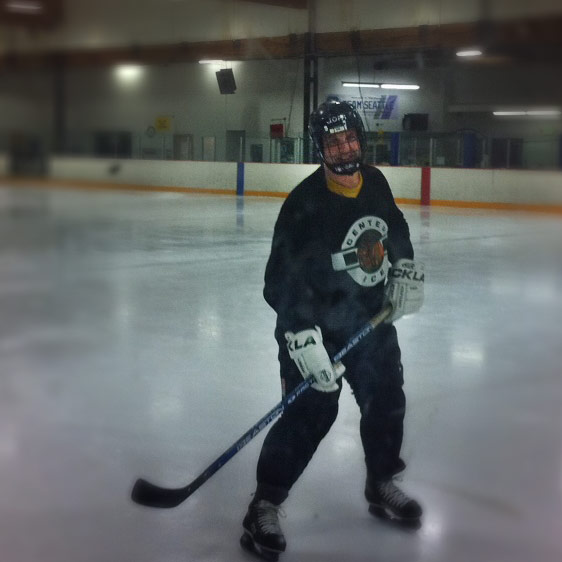
As for his plans about playing ice hockey? According to Nagel, he resumed participation in a men’s league even scoring several goals, but he probably will forego snowboarding.

Bailey overcomes injury, orthopaedic surgery to lead Bolingbrook to first state football title

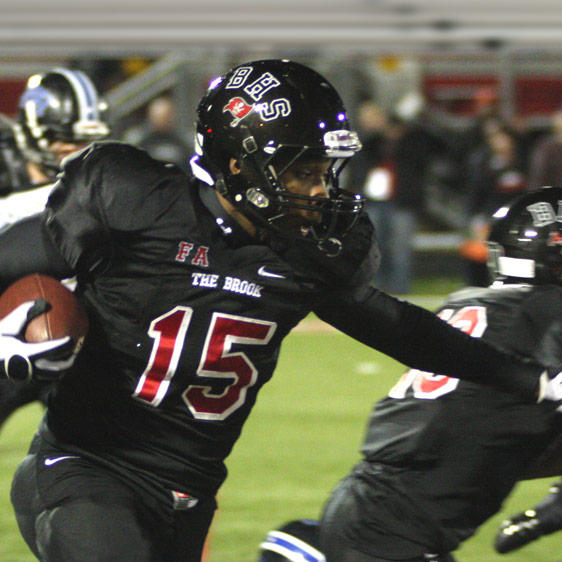
With barely 5 minutes remaining in the Illinois Class 8A state championship final, the No. 2-rated Bolingbrook High School Raiders trailed the No. 1-rated Loyola Academy Ramblers from Wilmette, 17-14. Junior Bolingbrook quarterback Aaron Bailey was in the toughest game of his life, but one he and his teammates will remember the rest of their lives. Determined not to let their 13-1 season end with a title loss, the 6-foot-2, 215-pound Bailey broke through Loyola’s defense bolting 33-yards for the winning touchdown and the first state title in the school’s history. Little did any of the rain-soaked fans know that Bailey had arthroscopic knee surgery by Dr. Steven Chudik, orthopaedic surgeon and sports medicine physician with the Steven Chudik Shoulder and Knee Injury Clinic that enabled Bailey to play that memorable game and season.

I actually injured my knee during a baseball game when an opponent slid into my knee,” Bailey said. “I had X-rays, but they didn’t show anything conclusive. Dr. Chudik ordered additional X-rays because he wanted to see my knee from other angles. Unfortunately, they didn’t show anything either so I had to have an MRI,” Bailey explained.

According to Dr. Chudik, Bailey’s MRI revealed deep bruises on his knee, but no obvious ligament or meniscus damage. “I recommended a conservative approach to start—limiting activities to prevent pain and physical therapy followed by a gradual return to activity,” said Dr. Chudik. “After a few weeks and not much improvement, I knew something more was wrong and recommended a diagnostic injection. Because Aaron got almost immediate relief, but only temporary, I knew the pain was coming from inside the joint so I recommended arthroscopic surgery to determine the actual cause of the pain,” Dr. Chudik explained.

“The outpatient surgery only took about 30-minutes and it provided the answers the X-rays and MRI couldn’t,” Bailey said. “Dr. Chudik removed part of my medial plica which he told me is typically a normal tissue in my knee. Sometimes with an injury, the plica scars and thickens and can cause a lot of pain and problems. That’s what happened to me,” he added.

Following the knee surgery, some might think the Raiders QB might be cautious or overly protective to prevent re-injury, but it never entered his thoughts since returning to the gridiron. “If I worry about getting hurt, I will. I just go out and play and give it my all,” Bailey said. “I’m good to go and haven’t had any problems thanks to Dr. Chudik.

New ACL arthroscopic procedure by Dr. Steven Chudik lets active kids stay active

One minute 8-year-old Matt Cesario was sitting atop a swing set with a neighbor and the next he was hanging from the side support brace by his right knee—a twist of fate that spared Matt’s spine and changed the course of his young life for the next five years.

Matt can’t recall much from the accident, but his mother, Debbie Cesario, remembers it as if it happened yesterday. “We were at the neighbor’s for dinner where Matt was playing. I heard Matt scream when he fell, but by the time I got to him he’d already unhooked his leg and dropped to the ground,” Debbie explained. “I was relieved to see he was conscious, able to stand and “run off” to continue playing,” she said.

However, her relief was short lived. “At 4 a.m. Matt was in horrible pain and couldn’t bend his knee,” Debbie said. Matt does remember that morning and the ER doctor telling him “it was sprained, to put ice on it and take it easy for a couple of weeks.” According to Matt, now age 13, the next two weeks were anything but easy. “My knee got hit or pulled two different times,” he lamented. “After the second hit, my knee really hurt so I knew something was wrong,” Matt said. Fortunately, a neighbor knew Dr. Steven Chudik from her work at Hinsdale Hospital and recommended Matt see him.

The ensuing MRI and diagnosis was a torn right anterior cruciate ligament (ACL). “Because of his age, Dr. Chudik said we had to make a choice—either keep him out of all activities for the next several years until he grew more, or have arthroscopic surgery to repair Matt’s ACL,” Debbie explained. “We couldn’t bring ourselves to turn a young, active boy into an inactive, sedentary person, so we opted for surgery.”

“With ACL surgery, the torn ligament is replaced with a tendon graft,” explained Dr. Steven Chudik. “In a child, though, current surgery techniques risk damage to their growth plates which can result in deformity and uneven leg growth,” he said. “For that reason, many surgeons will not operate. However, I developed an arthroscopic technique that replaces the ligament while completely avoiding the growth plates,” Dr. Chudik explained. “Matt was one of my first patients to have this procedure.

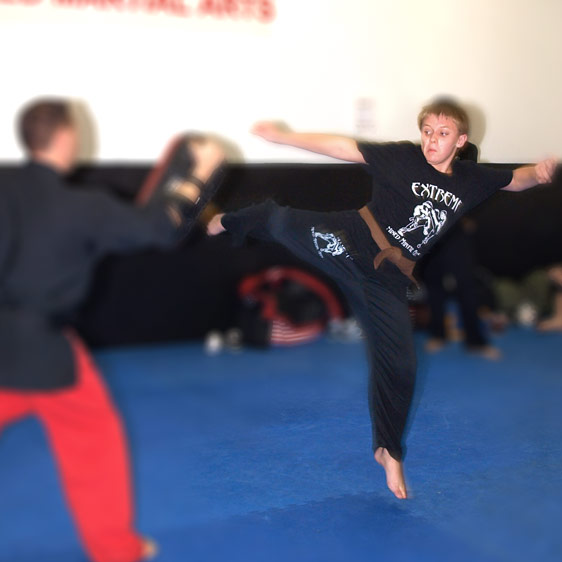
Following the arthroscopic ACL surgery, one week in a cast and five months of physical therapy, Matt returned to playing baseball as a catcher, bowling, hunting and being one of the fastest runners in his school. However, Matt is most proud of his newest athletic endeavor—extreme mixed martial arts—that he started in 2010. “The classes include kick boxing, boxing, martial arts, street jiujutsu and street defense,” Matt explained. “The boxing class is adult level so I’m the youngest one there,” he added.

According to his mother, Matt’s involvement in the extreme sports makes him more flexible and works his entire body—especially his legs. “Had anyone asked me five years ago when Matt first got injured if he’d be able to do anything like this, I would have said no,” Debbie said. “I was worried if Matt would even be able to slide in baseball. We owe a lot to Dr. Chudik and the arthroscopic ACL surgical technique he developed for children.” Matt agrees as he displays the one-inch thick wood boards he broke with his bare foot and the brown/black belt he recently earned.