Competitive running, bicycling back on energetic executive’s schedule between work, volunteering

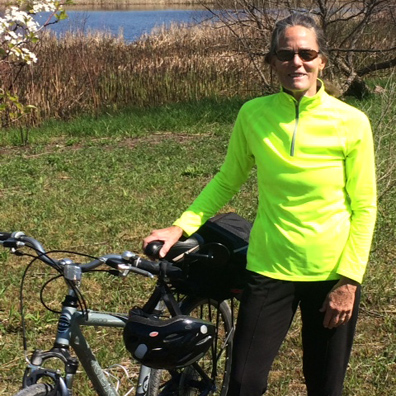
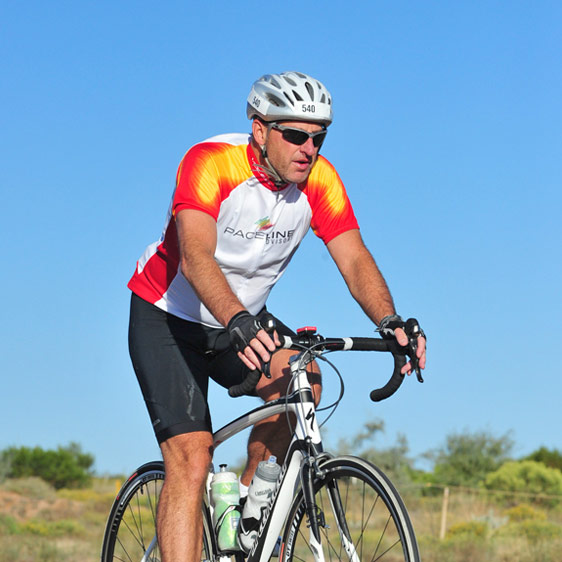
Robert Nutt says he is retired, but his daily planner paints another picture. As president and managing director of Paceline Advisors, a strategic business and financial consulting firm Nutt created after 30 years in corporate finance and operations, he travels constantly and volunteers for three organizations and businesses. His hectic schedule does not leave much time for relaxation, let alone skiing, bicycling and running marathons. In fact, a bicycling accident during a training ride in Scottsdale, Arizona, almost ended Nutt’s ability to participate in any recreational activities.

According to Nutt, he was about 40 miles from the start when another rider accidently clipped his back tire causing him to fall. “It happened so quickly I was on the ground before I knew what happened and my left knee took the brunt of my fall,” Nutt explained. Unable to finish the ride, he was taken to the emergency room where doctors gave him the bad news. “I tore my medial collateral and posterior cruciate and anterior cruciate ligaments (MCL, PCL, ACL), as well as my meniscus,” he said. “They put a brace on my knee to stabilize it and I flew home to Darien, Illinois, uncertain if I’d ever be able to race again, let alone be able to ride a bike,” Nutt said.

To allow his knee swelling to subside, Nutt started a conservative physical therapy under the care of an orthopaedic surgeon at Hinsdale Orthopaedics in Hinsdale, Illinois, before being referred to the practice’s arthroscopic shoulder and knee specialist and a US News & World Report Top Doctor in orthopaedics, Dr. Steven Chudik.

“As a Type A personality, I’m not one to sit so I wanted to proceed with surgery as soon as Dr. Chudik explained that was the only solution for me to have even a chance of running or biking again,” Nutt said. “I learned later that Dr. Chudik told my wife after my surgery he’d be surprised if I’d ever be able to run more than 10 miles at one time because of the extensive damage he repaired during my five hour operation. She told him not to tell me that and I’m glad neither did,” Nutt laughed.

“Robert tore nearly every ligament in his knee,” Dr. Chudik explained. “It was a terrible injury. His recovery is a testament to his determination and commitment to completing his rehabilitation program and returning to his active lifestyle,” he added.

Following five weeks in a brace, six months of physical therapy three times per week and home exercises every day, Dr. Chudik cleared Nutt to resume his activities limiting his bike riding to just one to two miles per day to start. According to Nutt, that did not last long. “I regularly ride a couple hundred miles a week, and was anxious to get back to running and biking. My come back goal was the Mercedes Benz Marathon in Alabama and to participate in RAGBRAI (Register’s Annual Great Bike Ride Across Iowa),” he said. RAGBRAI is the longest, largest and oldest annual bicycle-touring event started in 1973 as a friendly challenge between two Des Moines Register newspaper employees. According to the Register’s event information, the annual, seven-day ride averages nearly 500 miles beginning with a traditional dipping of riders’ back tires in the Missouri River and ending with the dunking of their front tires in the Mississippi River.

Today, Nutt annually competes in several marathons a year, RAGBRAI and downhill skis without hesitation or reservation. “I’m very grateful to Dr. Chudik for giving me back my active lifestyle. I can’t imagine what I’d be doing if it were not for him,” Nutt said.
Repeated shoulder dislocations, surgeries don’t sideline former rugby player Shawn Bastic

If you’ve never seen a rugby game, the best way to describe it is football without helmets and pads. As a full-contact sport without protective gear, rugby players are prone to orthopaedic injuries—just ask Shawn Bastic, former University of Illinois—Chicago (UIC) and founding member of the Chicago Riot Rugby Club.

While playing rugby for UIC, Bastic dislocated his left shoulder in the fall of 2002. He completed rehabilitation and the following spring dislocated his shoulder again. “I was told by the physician that dislocations commonly reoccur,” explained Bastic. “To help prevent it from possibly happening again, I opted for surgery and went through the entire rehabilitation process, again.”

However, his recovery was short lived. During the next three years, Bastic dislocated his left shoulder several more times, each time requiring a trip to the emergency room and ultimately another surgery at the same highly-respected Chicago hospital. The repeated dislocations, surgeries and months of rehabilitation didn’t dissuade Bastic from playing. “I continued to play,” said Bastic. “I just wasn’t ready to give up the game.”

Eventually, though, the dislocations got to be too much. “My shoulder continued to dislocate frequently and at random, odd times, like reaching overhead, working out, or just doing everyday tasks,” Bastic said. “I wanted to remain active, but also knew I had to do something or as I got older I was going to have even worse problems.”

Fortunately, a teammate’s father was an orthopaedic surgeon and referred Bastic to Dr. Steven Chudik, an orthopaedic surgeon and sports medicine physician with the Steven Chudik Shoulder and Knee Injury Clinic who specializes in shoulder and knee arthroscopic surgery. Upon examining Bastic’s shoulder, Dr. Chudik ordered a 3-D CT scan that confirmed what he suspected—a damaged shoulder socket (glenoid) that previous surgeries didn’t correct.

“Shawn’s prior surgeries failed because the surgeons missed the injury to the shoulder socket,” Dr. Chudik said. “The socket is like a golf tee and if part of it is missing, it can’t hold the golf ball in place,” he explained. In the case of a glenoid, the broken portion is absorbed so bone has to be taken from another part of the body to rebuild the socket. According to Dr. Chudik, this seldom-performed surgery is done in America through an open incision and requires cutting the rotator cuff and dislocating the shoulder. Fortunately for Bastic, Dr. Chudik developed a procedure and surgical instruments to reconstruct the glenoid arthroscopically and he was the first in the country to undergo the procedure. “Since Shawn’s surgery, I’ve done many more all with great outcomes like his,” Dr. Chudik said.

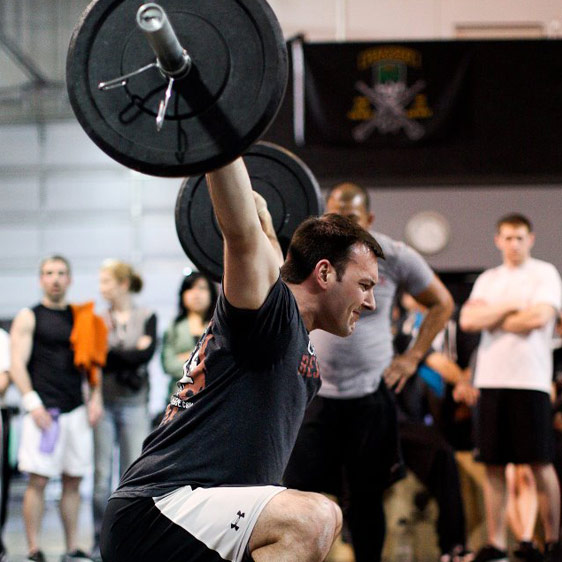
Although no longer playing rugby, Bastic remains active in the sport refereeing games in Chicago and the Midwest. He also competed in a Half Iron Man race and several Crossfit challenges that included weight lifting and rowing. “I’m doing things now I couldn’t before my surgery with Dr. Chudik,” Bastic explained. I have my active lifestyle back and I’m looking forward to being able to play with my daughter as she grows up. Maybe even teach her how to play rugby,” he joked.

Santi simultaneously rebuilds his shoulder and his house

Most people in Northern Illinois will remember the winter of 2011 for the Ground Hog Day blizzard. Tony Santi, founder and president of J2 Santi, Inc. custom homebuilding, youth athletic coach and weekend athlete from Western Springs, Ill., recalls it differently. In January that year, Santi slipped on his icy sidewalk. “I reached back to brace myself with my free hand and the next thing I knew I was on the ground. I thought I had broken my arm, but I dislocated my right shoulder,” explained Santi. “So, I crawled back into the house and called Dr. Steven Chudik.” Dr. Chudik, an orthopaedic surgeon and sports medicine physician with the Steven Chudik Shoulder and Knee Injury Clinic in Westmont, Ill., reduced Santi’s shoulder and recommended he schedule a follow-up clinic appointment.

According to Santi, his shoulder problem actually began 20 years earlier when he partially tore his rotator cuff while playing basketball. Because the injury did not adversely slow him down, Santi delayed treatment and only had physical therapy for his injury. “I knew my arm was weak when I worked out, but I was able to do everything I needed. I didn’t see the need for surgery,” Santi said. With his new injury, Santi opted to try physical therapy first. “Retrospectively, I should have done something sooner,” he added.

After three months of physical therapy, Santi tried to play recreational sports, but couldn’t. “I could barely raise my arm. I had no strength. I knew if I ever wanted to play competitively again, I needed to see Dr. Chudik and hear my options, Santi said.”

“After reviewing Tony Santi’s MRI, I recommended surgery because in terms of injury severity, his was the worst possible. It involved all four rotator cuff tendons and his biceps tendon,” said Dr. Chudik. “Typically an injury of that magnitude is considered irreparable, but because he was so young I had to try and repair what I could. His prognosis for returning to an active lifestyle, let alone throwing and shooting activities, was poor,” he explained.

Santi’s arthroscopic rotator cuff surgery, normally a two-hour procedure, took more than four hours because of the extensive scaring and extreme retraction of the rotator cuff. “I basically rebuilt his shoulder,” said Dr. Chudik. “Technically I was able to repair everything, but questions remained about whether it would heal completely and how much function would return.”

Not one to shirk challenges, Santi began physical therapy within days of his surgery and an addition on his home. “I figured as long as I was going to be home it would be a good time to do the addition,” Santi said. “So, three days a week for five months I went to physical therapy and then home to oversee the construction of our addition. This rehabilitation was much more difficult than my earlier ones, but I didn’t cut any corners. I took my rehabilitation seriously and did as much as I could—and then some, he added.”

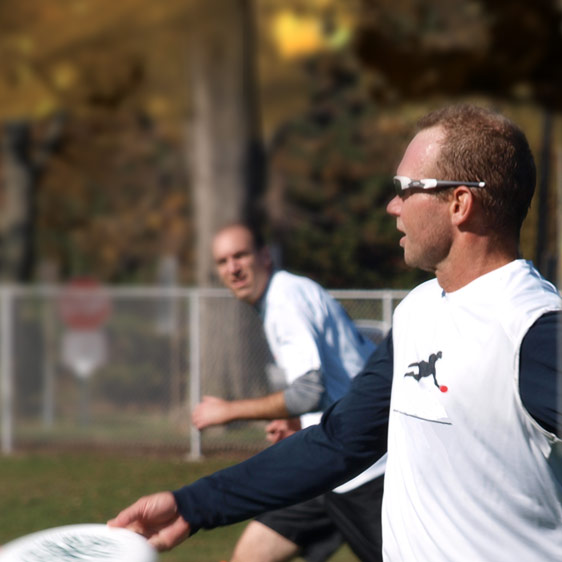
Less than a year after surgery, Santi is playing basketball, Ultimate Frisbee, catch with his children and in better shape than he has ever been. “Tony Santi is a testament to dedication and determination,” said Dr. Chudik. “Most would not be able to recover as well as he did after such a severe injury and big surgery. It is important to take care of injuries when they occur—do not wait. Most injuries only get worse with time.”

Mary Falck returns to the slopes and her very active life

Imagine slamming into a tree going more than 20 miles per hour with only the protection of a helmet. Imagine that same scenario, but as a petite downhill skier getting hit so hard by a snowboarder that you are lifted off the snow and thrust into a pine tree becoming a human airbag. According to avid downhill skier Mary Falck, that happened to her while vacationing in Colorado. Understandably, Falck does not remember much about the accident, but the severe injuries that resulted—a fractured pelvis, femur, wrist and ankle, as well as multiple torn knee ligaments—would become her biggest challenge. “I just completed a more rigorous ski run where I achieved the million vertical feet mark for the year,” Falck explained. “To celebrate and unwind, my husband and I decided to take another run, but on a less difficult slope. That decision changed the next two years of my life and potentially the rest of my life,” she said.

After the Ski Patrol stabilized Falck, they helicoptered her to Denver where she underwent emergency surgery. “I was in intensive care for several days before moving to in-patient rehabilitation where I stayed for three weeks until I was able to travel,” she lamented.

Falck explained her recovery process was incredibly difficult and long. The fractures on the right side of her body healed slowly with her ankle taking the longest. However, her unrepaired left knee made her unstable and physical therapy nearly impossible. “I was so frustrated by that point my husband contacted the orthopaedic surgeon he’d seen at Hinsdale Orthopaedics,” she said. “He referred her to his partner, Dr. Steven Chudik.” Previous doctors Falck saw told her a total knee replacement was her only option because her knee was in such bad condition. She was hopeful Dr. Chudik would tell her something different.

According to Dr. Chudik, a board certified and fellowship trained orthopaedic surgeon and sports medicine physician, Falck’s injuries were so severe he could not put her through knee surgery and more rehabilitation until she was healed and able to walk. “Quite honestly, I didn’t think she would be able to have a successful outcome until her injuries healed,” he explained. “So despite her strong objections and repeated protests, I told her I would not operate until she was in a better overall functional condition. It is important to me to treat each patient individually and not necessarily ‘by the book’ because everyone has different functional and lifestyle goals,” Dr. Chudik added.

For the next six months, Falck never missed a physical therapy session determined to get her right side fully rehabilitated. However, her injured left knee hindered her in therapy and caused her extreme frustration. “My knee buckled during a therapy session and by then I’d had enough,” she said. “I made another appointment to see Dr. Chudik. We discussed my options and injuries—torn ACL, PCL, and PLC (anterior and posterior cruciate ligaments, and posterior lateral corner ligaments), severe cartilage damage and arthritis of the knee. “Despite the extent of the damage, I refused to accept that I could not regain my previous life style,” she explained.

“Given the severity of her injuries, a total knee replacement was the only reliable option. But, that wouldn’t guarantee she’d be able to return to her previous level of skiing,” Dr. Chudik said. “Conversely, ligament reconstruction with her severe cartilage damage and arthritis would likely produce permanent loss of motion, weakness and inability to ski,” he explained.

Determined to ski, Falck elected to proceed with surgery. Dr. Chudik performed
an anatomic, multiple knee ligament reconstruction and coached her through the difficult rehabilitation. “Dr. Chudik warned me it would be a long recovery,” Falck said. “But I did it!

Two years after her accident, Falck resumed the active life she loves–even skiing.

Orthopaedic Surgery and Sports Medicine Teaching and Research Foundation presents research at national, international meetings

It is not the Academy Awards, but being selected by peers to present research at professional medical meetings and conferences, or have your research published, is as close as it gets for physicians. Like the Oscar, getting one selection a year is outstanding, but to receive six—as in the case of Dr. Steven Chudik this past year—it is an exceptional accomplishment. Four Orthopaedic Surgery and Sports Medicine Teaching and Research Foundation (OTRF) research projects conducted by Dr. Steven Chudik and honors medical students from Loyola University Stritch School of Medicine and Rosalind Franklin School of Medicine, were presented at national or international annual conferences to more than 8,000 physicians and one was accepted for publication.

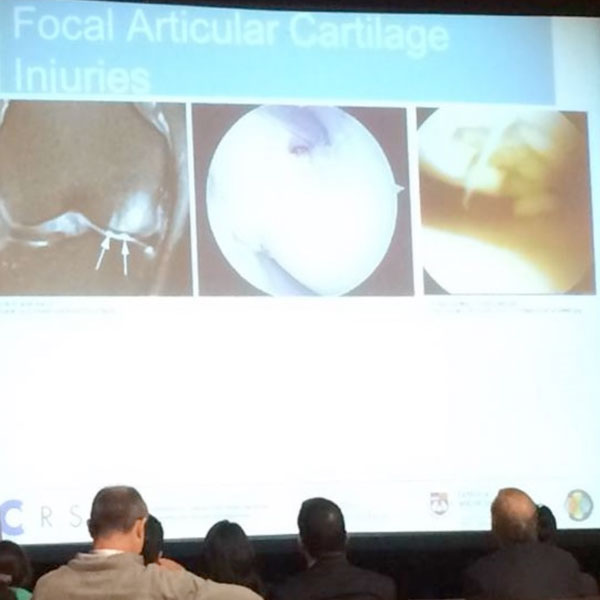
According to Dr. Steven Chudik, founder and president of OTRF, the organization’s research has been presented and published many times in the past. “What most people don’t realize is that research goes on all around us every day in all fields, not just medicine,” said Dr. Chudik. “With OTRF research projects, we evaluate and improve patient care by conducting clinical outcome research. Through these efforts we continue to gain a understanding of anatomy, injury and healing; basic sciences; and we innovate and create new technology to develop less invasive and more effective surgical procedures, surgical instruments and implants,” he explained.

The OTRF-sponsored research projects chosen for presentation are:

  • Osteochondral Repair with Synthetic Plugs Increases the Coefficient off Friction and Damages the Opposing Cartilage Counterface, presented by Rosalind Franklin medical student, Aaron Baessler, to the International Cartilage Repair Society, Chicago.
  • Pre-Operative Video Education Has a Positive Impact on Patient Arthroscopic Surgical Experience But May Not Improve Satisfaction Scores, presented by Loyola University Stritch School of Medicine medical student, Greg Barton, to the International Cartilage Repair Society, Chicago.
  • A Biomechanical and Clinical Comparison of Midshaft Clavicle Fixation Performed with Either Two or Three Screws on Each Side of the Plate, presented by Loyola University Stritch School of Medicine medical students, Christopher Larsen and Brian Sleasman, to the American Orthopaedic Society for Sports Medicine, Orlando, FL.
  • Osteochondral Repair with Synthetic Plugs Increases the Coefficient off Friction and Damages the Opposing Cartilage Counterface, presented in Lyon, France at the International Cartilage Repair Society.
  • A Biomechanical and Clinical Comparison of Midshaft Clavicle Fixation Performed with Either Two or Three Screws on Each Side of the Plate, presented by Loyola University Stritch School of Medicine medical students, Christopher Larsen and Brian Sleasman, to the joint meeting of the American Society for Clinical Investigation and Association of American Physicians (ASCI/APP), Chicago.

The OTRF-sponsored research recently chosen for publication in Arthroscopy: The Journal of Arthroscopic and Related Surgery is:

  • Transhumeral portal for arthroscopic glenohumeral resurfacing procedures: A cadaveric study of the safety and accuracy, written by Loyola University Stritch School of Medicine medical student, Kim Bartosiak.

A complete list of active and past OTRF-sponsored research can be accessed by clicking the OTRF Research tab above.